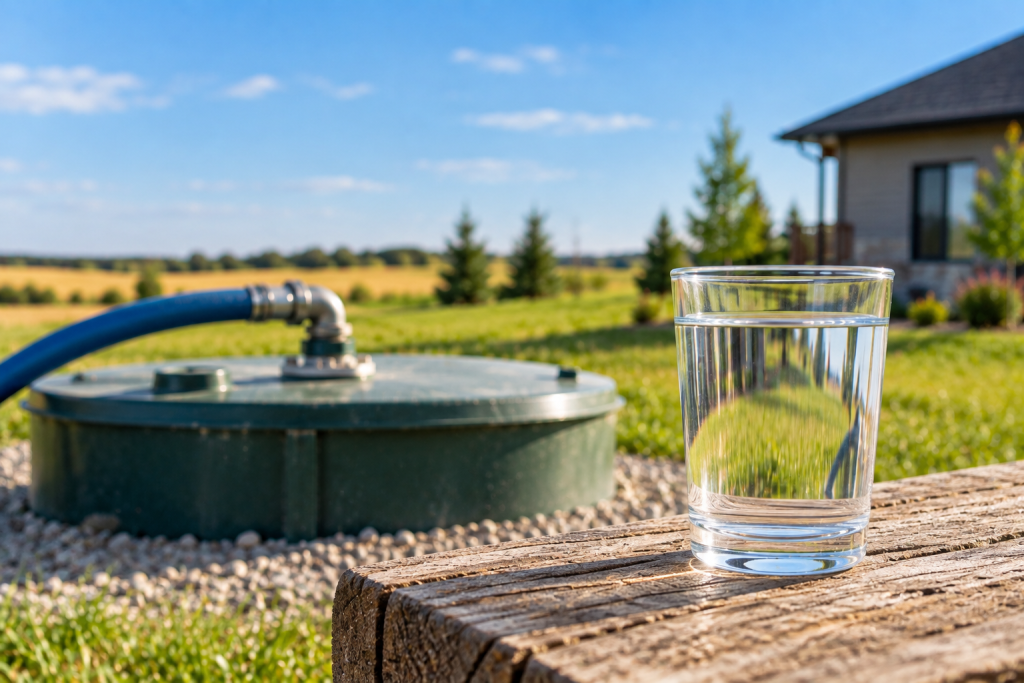

Cistern water treatment in Saskatchewan involves more than starting with clean hauled water. Water quality can change during transportation, transfer, and storage, especially if delivery equipment or the cistern is not properly maintained. Keeping a cistern clean and sanitary, protecting it from contamination, monitoring water quality, and using treatment suited to the home’s actual water conditions can provide multiple layers of protection for rural households.
Cistern water treatment in Saskatchewan is an important consideration for rural households that depend on hauled water rather than a conventional municipal connection or private well.
The water delivered to your property may begin as treated drinking water, but getting it safely from the original source to your kitchen faucet involves several additional steps. It has to enter a delivery truck, travel to your property, move through hoses and other equipment, enter the cistern, remain in storage, and finally travel through your home’s plumbing.
Each stage creates an opportunity for water quality to change.
That’s why hauled water safety is best approached as a complete system. The water source matters, but so do the delivery equipment, cistern condition, cleaning and disinfection practices, household plumbing, and any filtration or disinfection equipment installed after the cistern.
How Does a Cistern Water System Work?
A residential cistern is a storage tank that holds water for later use throughout the home. For many rural Saskatchewan properties, potable water is delivered by truck and transferred into the cistern, where it remains until the household needs it.
A pump then moves the stored water into the home’s plumbing system.
That creates a different water-quality pathway than a home connected directly to a municipal distribution system. Instead of moving directly from the public system to the property, hauled water passes through additional equipment and spends time in onsite storage.
For rural homeowners, that makes the cistern part of the drinking-water system rather than simply a storage container.
Infinite Water’s farm and rural water solutions provide additional context for Saskatchewan properties using alternative water supplies.
Can Hauled Water Become Contaminated?
Yes. Hauled water quality can be affected during transportation, transfer, and storage even when the water originally came from a treated potable source.
Potential contamination points include:
- The original water source
- The delivery truck or tank
- Pumps and transfer equipment
- Hoses and fittings
- The cistern opening
- The inside of the storage tank
- Household plumbing after the cistern
Equipment used to transport potable water should be maintained in sanitary condition and protected from substances that could contaminate the supply.
The transfer process matters as well. Dirty hoses, improperly stored equipment, openings exposed to soil or debris, and backflow can create opportunities for contamination between the source and the cistern.
Safe cistern water depends on more than the water inside the delivery truck. The source, transportation equipment, transfer process, storage tank, treatment equipment, and household plumbing all form part of the system.
Why Can Water Quality Change Inside a Cistern?
Stored drinking water can deteriorate over time if the cistern is not properly operated and maintained.
Unlike water continually moving through a distribution system, cistern water may remain stored for extended periods. Conditions inside the tank can change as disinfectant residual decreases, sediment accumulates, or microorganisms find opportunities to grow.
Water quality may also be affected by:
- Sediment collecting on the bottom of the tank
- Biofilm developing on interior surfaces
- Damaged or poorly sealed access points
- Insects, debris, or other material entering the cistern
- Contaminated filling equipment
- Long periods of water storage
- Insufficient cleaning and maintenance
A cistern that looks fine from the outside may still require maintenance internally. This is why cistern condition should be considered alongside the quality of the delivered water.
How Often Should a Water Cistern Be Cleaned?
There is no single cleaning interval that should be applied blindly to every residential cistern. The appropriate maintenance schedule depends on the system, water source, tank condition, sediment accumulation, water usage, manufacturer requirements, and applicable local guidance.
Health Canada guidance emphasizes that cisterns should be maintained in a clean and sanitary condition. They should be cleaned and disinfected before being placed into service and when parts of the system are dismantled for repair, maintenance, or replacement.
Rather than waiting for the water to develop an obvious problem, homeowners should establish an inspection and maintenance routine appropriate for their cistern.
Signs that the system deserves attention may include:
- Visible sediment or debris
- Changes in water clarity
- Unusual taste or odor
- Evidence that the cistern cover or access point is damaged
- Recent plumbing or cistern repairs
- Known contamination during filling or delivery
- Unsatisfactory water-test results
Visible changes can indicate a problem, but water should not be assumed microbiologically safe simply because it looks, tastes, and smells normal.
How Is a Drinking-Water Cistern Cleaned and Disinfected?
Cistern cleaning generally involves removing accumulated material, cleaning accessible surfaces and components, and disinfecting the system using a procedure appropriate for the tank and household plumbing.
The exact process depends on the cistern design and condition. Homeowners should follow applicable Saskatchewan requirements, manufacturer instructions, and qualified professional guidance rather than guessing at disinfectant concentrations or contact times.
After cleaning or disinfection, the system may require flushing and appropriate water-quality verification before returning to normal use.
Should Cistern Water Be Tested?
Testing can help determine whether hauled and stored water remains suitable for its intended use and whether the cistern system is being maintained effectively.
Microbiological indicators are especially relevant because contamination can occur during transport or storage without producing an obvious visual change.
Health Canada guidance for hauled-water systems recommends monitoring microbiological indicators and disinfectant residual where applicable. The appropriate testing program for an individual Saskatchewan household can depend on the source water, delivery arrangement, treatment system, and local health guidance.
Testing can become particularly important after:
- A new cistern is placed into service
- The cistern or plumbing is repaired
- Cleaning and disinfection are performed
- There is suspected contamination during delivery
- The cistern is flooded or exposed to contaminated surface water
- Water develops an unexpected change
- A treatment system is installed or serviced
Homeowners can start by learning more about Infinite Water’s water testing process and determine whether additional laboratory analysis is appropriate for their cistern supply.
Does Cistern Water Need Additional Filtration?
Not every cistern-fed home requires the same filtration system. Treatment should be based on the water source, cistern condition, household plumbing, test results, and the specific problem being addressed.
Depending on those conditions, a cistern treatment setup might include sediment filtration, carbon filtration, UV disinfection, or other treatment technologies.
Sediment filtration can help capture suspended particles before they move through downstream treatment equipment or household plumbing.
Activated carbon filtration may be used for certain taste, odor, or chemical concerns depending on the product’s certified performance claims.
UV disinfection can provide a microbiological treatment barrier when the equipment is properly selected and the incoming water meets the system’s pretreatment requirements.
Health Canada recommends choosing drinking-water treatment equipment certified to the appropriate NSF/ANSI performance standard for the contaminant or treatment objective.
Infinite Water’s custom water treatment approach can help match equipment to the home’s actual water conditions instead of relying on a one-size-fits-all setup.
Is UV a Good Option for Cistern Water?
UV disinfection can be an effective additional barrier against microorganisms when the system is properly designed, installed, and maintained.
UV works by exposing water to ultraviolet light that inactivates susceptible microorganisms. However, the effectiveness of the system depends heavily on the quality of the water entering the UV chamber.
Cloudiness, sediment, and other water characteristics can interfere with UV performance. Pretreatment may therefore be needed before the water reaches the UV unit.
UV equipment also requires ongoing maintenance. Lamps, sleeves, filters, and other components need attention according to manufacturer instructions, and the system must continue operating properly to provide the intended treatment.
What Does a Good Cistern Water Treatment Setup Look Like?
A well-designed system creates multiple barriers between potential contamination and the water your household ultimately uses.
Depending on the property’s needs, the treatment path may look something like:
Potable Water Source → Sanitary Hauling & Transfer → Clean Cistern → Sediment Pretreatment → Appropriate Filtration → UV Disinfection Where Needed → Household Plumbing
This is an example of a treatment sequence rather than a universal equipment prescription. Some homes may require fewer stages, while others may have additional water-quality concerns that require different treatment.
The important principle is that each component should have a clear purpose based on the water and the risks present.
How Can You Keep Hauled Water Safer Between Deliveries?
Good cistern water management begins before the delivery truck arrives and continues until the water reaches the tap.
Useful practices include:
- Use a reputable potable-water source and delivery provider
- Keep the cistern access point securely covered
- Prevent soil, insects, animals, and surface water from entering the tank
- Keep fill connections clean and protected between deliveries
- Watch for damage to covers, vents, seals, or plumbing
- Follow an appropriate inspection, cleaning, and maintenance schedule
- Maintain filters, UV equipment, and other treatment components
- Test water when conditions indicate a potential problem
Water should also be managed to avoid unnecessary stagnation. Long storage periods can contribute to deterioration in water quality, particularly as disinfectant residual declines.
Local Authority: Cistern Water Treatment for Rural Saskatchewan
Hauled water and cistern storage can be a practical part of rural life in Saskatchewan, particularly for properties without straightforward access to a conventional drinking-water supply.
Those systems create responsibilities that don’t necessarily exist in a home connected directly to municipal distribution. Homeowners need to think about where the water comes from, how it is transported, how it enters the property, what happens during storage, and how it is treated before use.
Infinite Water’s content strategy specifically identifies Saskatchewan farm and acreage owners as an important audience for rural water treatment, including properties relying on alternative water supplies. The goal is not to prescribe identical equipment for every cistern. It’s to understand the water and build a treatment approach around the property’s actual conditions.
Is hauled water safe to drink after being stored in a cistern?
How often should a drinking-water cistern be cleaned?
Can bacteria grow in a water cistern?
Does cistern water need UV treatment?
Should I filter cistern water before drinking it?
How do I know if my cistern water is contaminated?
Protect Your Hauled Water From Delivery to Tap
For rural Saskatchewan homes, keeping cistern water safe isn’t just about ordering clean water. It’s about protecting that water throughout transportation, transfer, storage, treatment, and household use.
A sanitary cistern, properly maintained delivery connections, appropriate cleaning and disinfection, water testing, and correctly selected treatment equipment can work together as multiple barriers against water-quality problems.
If you’re unsure what your cistern-fed home needs, start by evaluating the complete system rather than purchasing equipment based on assumptions.
Get a Free Cistern Water Assessment from Infinite Water to discuss your hauled-water setup, storage system, and water treatment needs.