Saskatchewan’s water hardness is driven by naturally occurring calcium and magnesium in prairie limestone and dolomite bedrock. Testing your home’s water is the essential first step to determining exact hardness levels and designing a treatment plan that improves comfort, protects appliances, and enhances overall water performance. Properly sized softeners or conditioners can help reduce scale, lower energy use, and extend the lifespan of plumbing systems.
Across the Prairies, many homeowners are surprised to learn how widespread water hardness in Saskatchewan really is. As groundwater and surface water travel through calcium and magnesium-rich formations, these minerals dissolve into the water supply, increasing hardness long before it reaches your tap. Hard water is not a health concern, but it can influence everyday tasks—from how easily soap lathers to how efficiently your water heater runs.
Signs like scale buildup on faucets, cloudy dishes, or stiff laundry are often the first indicators of mineral-rich water, and they reflect some of the most common hard water causes found throughout the province. Hardness affects performance, not potability, yet the long-term strain on appliances, pipes, and fixtures can increase maintenance costs. Understanding your water source—whether municipal, well, or dugout—is the best way to choose treatment that actually fits your home.
Because no two Saskatchewan water sources are identical, testing always comes first. Homeowners who want a better understanding of local patterns often review common water problems across the province or explore options for healthier drinking water solutions in Saskatchewan. This guide explains why the province’s water naturally runs hard, how hardness impacts daily life, and which treatment options produce the most reliable results.
Why is Saskatchewan’s water naturally so hard?
Saskatchewan water is naturally hard because groundwater and surface water move through prairie bedrock layers rich in calcium and magnesium. These mineral deposits dissolve slowly into the water supply, increasing hardness long before the water reaches municipal systems or private wells.
Because Saskatchewan sits on ancient sedimentary formations, the local geology has a direct impact on mineral content. As water percolates through limestone and dolomite, hardness levels increase in a predictable—but highly localized—way. This explains why neighbouring communities, or even homes on the same stretch of rural road, can show vastly different hardness readings.
Understanding your source water is essential for choosing the right system. Homeowners using wells or dugouts often experience higher hardness levels due to longer contact time with mineral-rich rock. Those exploring rural water setups frequently review resources on well water conditions on Saskatchewan acreages or look into dugout filtration strategies that address both hardness and clarity.
What does hard water look like inside your home?
Hard water shows itself through scale buildup, soap waste, cloudy dishes, and efficiency losses in appliances. These daily inconveniences are often the first clues that your water contains elevated mineral levels.
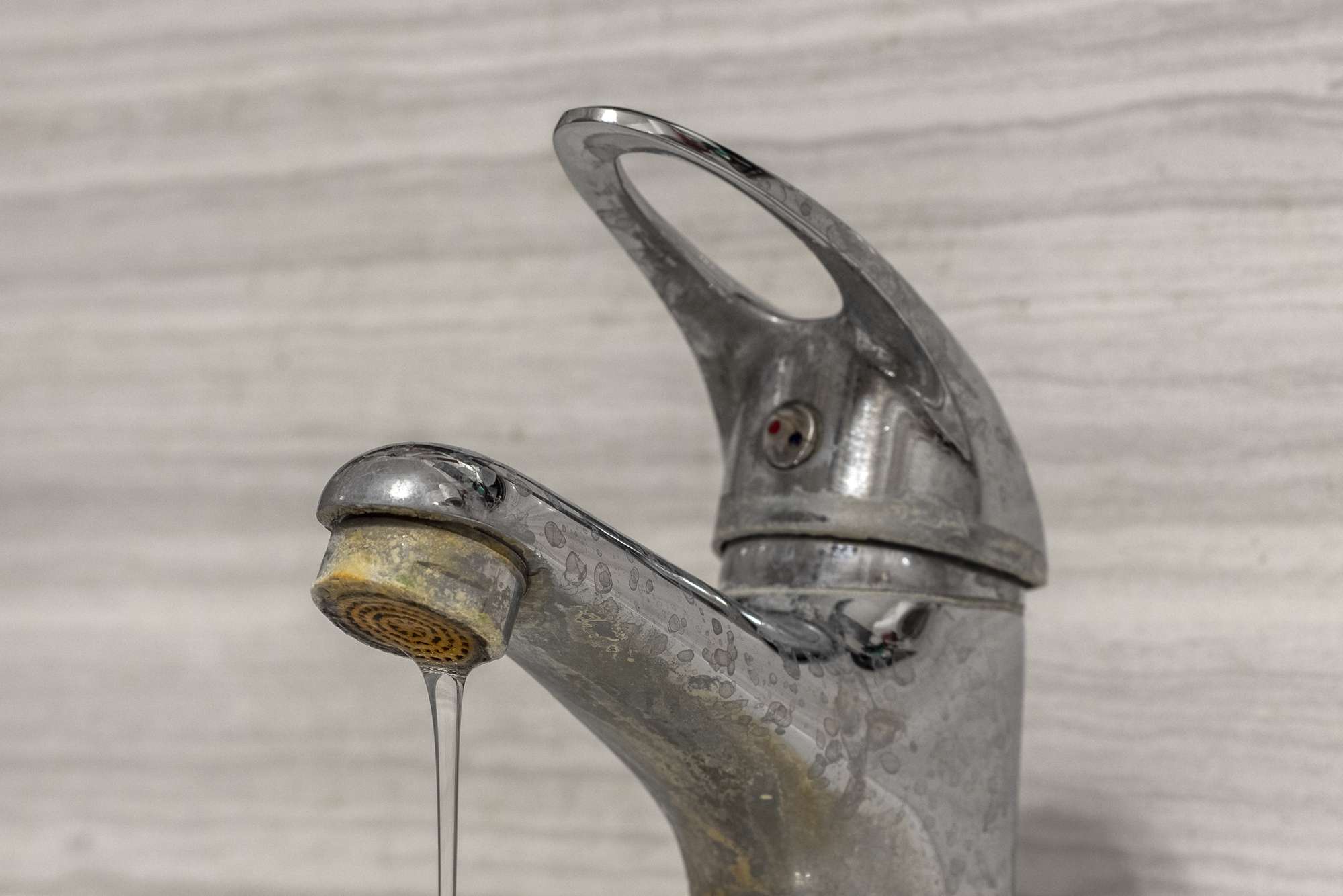
Scale forms when dissolved calcium and magnesium solidify on surfaces after water is heated or evaporated. This chalky residue narrows water flow inside pipes and coats heating elements, forcing water heaters, dishwashers, and washing machines to work harder than necessary. Soap becomes less effective because minerals bind with cleaning agents before they can do their job, resulting in more detergent use and less satisfying results.
- White scale forming on faucets, showerheads, and kettle elements.
- Cloudy dishes or glassware, even after the dishwasher runs.
- Soap scum in tubs, sinks, and showers due to mineral interaction with cleaners.
- Stiff or dull laundry that requires extra detergent.
- Hot water systems that take longer to heat due to scale on elements.
Many of these issues become clearer after reading about how hard water affects home efficiency, where the connection between minerals, energy use, and appliance wear is more fully explained. Homeowners who want to verify whether hardness is the true cause often begin with guidance on how to identify hard water at home before scheduling a test.
Why do iron, sulfur, and TDS appear alongside hardness?
Iron, sulfur, and total dissolved solids (TDS) often appear with hardness because they come from the same geological pathways—but each requires its own treatment approach. Homeowners often assume every stain or odour is caused by hardness, but these issues have distinct signatures and solutions.
Iron leaves yellow or rust-coloured stains on fixtures and laundry, while sulfur produces a “rotten egg” smell that can occur in both hot and cold water. Elevated TDS makes water feel heavier or leaves a residue on surfaces, depending on the minerals involved. These parameters are different from hardness even though they may originate from the same aquifers and bedrock formations.
Each mineral challenge requires targeted treatment. Iron staining is commonly addressed through oxidation or filtration, and those experiencing this issue often benefit from reviewing effective iron removal strategies for well water. If a sulfur odour is present, solutions described in Saskatchewan sulfur odour treatment methods may offer the needed clarity on where the smell originates and how to resolve it. TDS is broader in scope and may include dissolved minerals, salts, or metals; the differences are explained further in guides to understanding TDS.
Because iron, sulfur, TDS, and hardness create overlapping but distinct symptoms, the smartest approach is to test all factors at once. Complete testing prevents misdiagnosis and ensures equipment is selected—and sequenced—in the correct order for Saskatchewan conditions.
Why is testing the only reliable starting point?
A professional water test is essential because Saskatchewan homes vary dramatically in hardness, iron, sulfur, and TDS levels—even within the same community. Without real data, homeowners risk choosing equipment that is undersized, oversized, or not designed to solve their specific issues.
Hardness alone does not tell the whole story. A proper test measures calcium, magnesium, iron, manganese, sulfur, and TDS levels before any treatment decisions are made. Testing also reveals whether water quality fluctuates seasonally, which is common in rural and acreage settings. Homeowners who want a quick starting point often search for local water testing options to get a clearer picture of their household’s needs.
Once results are available, interpretation becomes the next critical step. Many homeowners consult water treatment FAQs to understand what their numbers mean and how different treatment systems work together. Proper analysis ensures treatments are sequenced correctly—for example, removing iron before softening or reducing TDS for cleaner drinking water outcomes.
What systems work best for water hardness in Saskatchewan?
Saskatchewan homes typically need a salt-based water softener for true hardness reduction, but the ideal system depends entirely on your water chemistry and usage patterns. Hardness minerals can only be removed through ion exchange softening, where calcium and magnesium are replaced with sodium or potassium ions. This dramatically reduces scale buildup and improves cleaning efficiency throughout the home.
Salt-free conditioners, while useful in some cases, do not remove hardness minerals. Instead, they modify how minerals adhere to surfaces. These systems can reduce visible scale but will not change your measured hardness level. Choosing between softening and conditioning depends on your goals and test results—not marketing claims.
Homeowners comparing system types often review how softeners and reverse osmosis pair together to improve both whole-home comfort and drinking water quality. Those exploring broader options may also browse available water treatment solutions designed for Saskatchewan’s unique geological and seasonal conditions.
- Reduces scale buildup inside appliances and pipes.
- Improves soap lather and cleaning efficiency.
- Helps maintain water heater performance and lower energy use.
- Extends the lifespan of dishwashers, washing machines, and fixtures.
- Enhances comfort for bathing, laundry, and cooking tasks.
Where does reverse osmosis fit into a Saskatchewan home?
Reverse osmosis (RO) is best used at the tap for drinking and cooking water, while softeners treat the water that flows throughout the entire home. These systems work together to deliver both softer household water and cleaner, better-tasting water at key fixtures.
Because hardness can shorten the lifespan of RO membranes, most Saskatchewan homes benefit from using softening as a pre-treatment step. After softening, RO focuses on finer dissolved impurities and delivers crisp, clean drinking water from an under-sink faucet or connected refrigerator dispenser. Those comparing filtration styles often explore the differences between under-sink vs. pitcher filters or review options for improving drinking water quality in different regions of the province.
Whole-home reverse osmosis also exists, but due to cost, complexity, and maintenance demands, it is typically considered only when hardness and TDS levels are exceptionally high. For most homeowners, RO at the tap provides the right balance of efficiency and quality.
Local Authority: Saskatchewan’s Hard Water Patterns and Regional Treatment Insights
Across Saskatchewan, hardness levels vary significantly depending on whether water comes from municipal systems, wells, or dugouts. Homes in Regina, Saskatoon, Moose Jaw, Prince Albert, Warman, Martensville, and many surrounding rural communities routinely report medium to very hard water due to widespread limestone and dolomite formations. Municipal reports often show elevated mineral levels before water even enters distribution systems, while acreage and farm properties frequently experience even higher readings because groundwater remains in contact with rock layers for longer periods.
Local homeowners often begin their research through resources like custom water treatment solutions designed for Saskatchewan homes, which highlight how geology, source type, and seasonal changes influence hardness, iron, sulfur, and TDS fluctuations. Whether your home relies on a private well, a dugout, or municipal supply, treatment is most effective when guided by a precise water test rather than generic assumptions.
Frequently Asked Questions About Saskatchewan Water Hardness
How can I tell if my home has hard water without a test?
Does hard water change the taste or smell of my water?
What’s the difference between hardness and TDS?
Do salt-free systems actually soften the water?
Is water softening safe for plumbing and appliances?
Ready to reduce scale and improve your home’s water quality?
Saskatchewan’s natural geology may result in harder water, but homeowners can dramatically improve comfort and efficiency through proper testing and treatment. With accurate data in hand, you can choose softeners, conditioners, or filtration systems that address your home’s exact challenges—whether those involve hardness alone or a combination of minerals like iron, sulfur, and TDS.
If you’re ready to understand what’s in your water, you can start by booking a professional test using the free water test request page. For more personalized guidance or system sizing help, many homeowners also reach out through the contact page to discuss local water patterns and next steps for their home.