| Key Takeaway: UV water filtration is a reliable, chemical-free way to reduce bacteria and viruses in rural Saskatchewan water supplies—especially for homes using private wells, dugouts, or cisterns. UV-C light inactivates microorganisms without altering taste or odor. For best results, most UV systems need pre-filtration to remove sediment and other impurities that can block UV light. |
Why UV Water Filtration Matters in Rural Saskatchewan
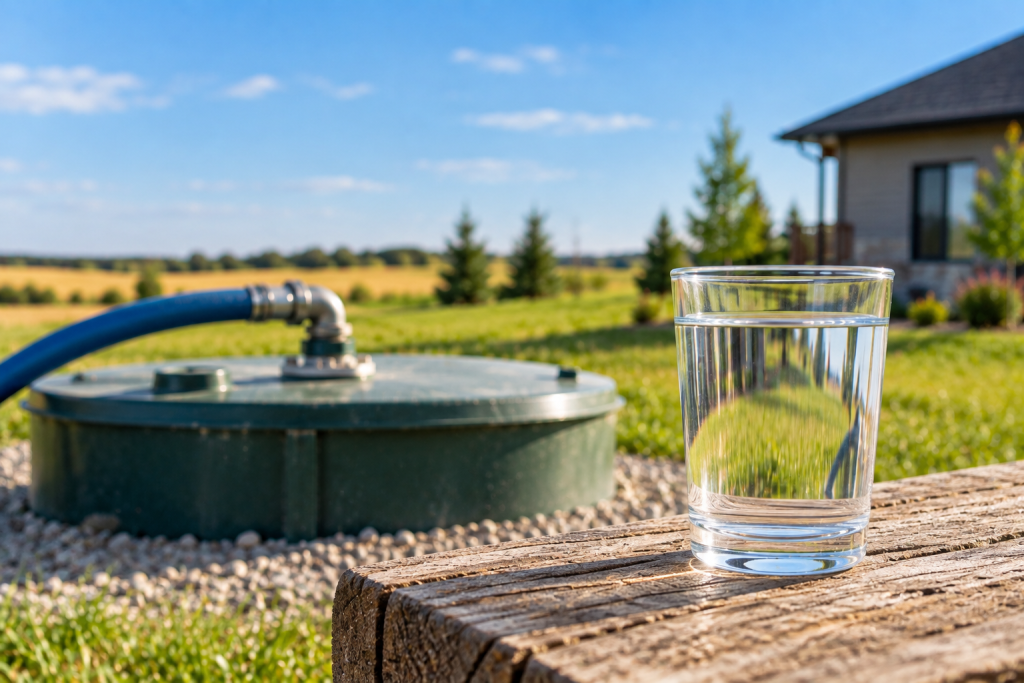
For many Saskatchewan families, water doesn’t come from a municipal treatment plant—it comes from a well, dugout, or cistern. These sources can provide excellent water, but they can also fluctuate rapidly due to seasonal runoff, flooding, drought, or nearby agricultural activity. A UV water filter provides rural homeowners with strong protection against microorganisms such as bacteria and viruses without adding chemicals or altering water taste.
If you have recently moved onto an acreage with well water, you may be learning that “clear” water isn’t always the same as “safe” water. UV systems help address microbial risk at the point of entry so water used for cooking, bathing, laundry, and drinking has a consistent disinfection step built in.
Because UV treatment depends heavily on water clarity, most rural setups benefit from a complete plan—not a single device. Many homeowners choose rural water solutions that combine sediment filtration, optional carbon filtration, and UV disinfection into one coordinated system. For best results, it helps to work with a specialist who understands the process of designing custom water systems based on your water source, flow rate, and test results.
How UV Water Filtration Works
UV disinfection uses a specialized lamp that produces UV-C light. As water flows through the chamber, UV-C energy disrupts the DNA of microorganisms, preventing them from reproducing. This is why homeowners often choose UV for coliform: it’s a proven approach for reducing common well-water bacteria without introducing chlorine or other disinfectants into the water.
It’s important to understand what UV does and does not do. UV systems are designed to address living organisms (bacteria, viruses, protozoa). They do not remove sediment, hardness minerals, iron, sulfur, pesticides, or dissolved solids. If your water contains those issues, UV should be used alongside other filtration or conditioning equipment.
To build the right setup, start with your water profile. Learning about common water problems can help you recognize whether turbidity, iron, or sediment could interfere with UV performance. If you’re unsure what’s in your water, booking local water testing is the smartest first step before selecting equipment.
When You Should Consider UV for Your Well, Dugout, or Cistern
UV systems are especially helpful when your water source is vulnerable to microorganisms. This includes shallow wells, older wells with questionable seals, dugouts, or surface-influenced supplies that can change after storms. Installing UV for well water disinfection gives you continuous protection every time water runs through your plumbing.
If your home relies on dugout water, UV is often part of a larger treatment train. A helpful place to start is this guide to dugout water filtration in Saskatchewan, which explains how sediment removal and disinfection work together to improve water safety and usability.
Because microbial risk can fluctuate, testing matters. Homeowners can begin by booking a free water test to check for bacteria and other issues that may require treatment. From there, technicians can design custom water solutions for Saskatchewan homes that match your water source and household demand.
Interesting Facts About UV Water Filtration in Saskatchewan Homes
UV filtration is popular across Saskatchewan because it reduces microbial concerns without chemicals. These facts highlight what it does best—and what it needs to work properly.
- A UV water filter inactivates microorganisms using UV-C light, helping improve safety for private wells and rural sources.
- Using UV for coliform is a common strategy for rural homes because coliform bacteria may enter water sources through runoff or surface influence.
- Many systems built for dugouts or surface-influenced sources include staged treatment, as explained in this dugout filtration guide.
- A UV light filter SK can support safer household water while maintaining natural taste and odor.
- Pre-treatment, like sediment filtering and iron removal, helps UV systems work effectively by keeping the UV chamber water clear.
- UV is often paired with reverse osmosis and water softeners to address microbial concerns, hardness, and drinking-water quality in one plan.
- Maintenance—such as bulb replacement and cleaning—supports long-term performance, and many homeowners use professional service programs for ongoing support.
Why Pre-Filtration Is Essential for UV Performance
UV disinfection depends on one key factor: light must reach the microorganisms. If your water is cloudy, tinted, or full of sediment, UV light can’t travel through it effectively. That’s why UV is rarely “plug and play” for rural sources.
In Saskatchewan, iron, sediment, and sulfur-related issues are common in many rural water supplies. Treating these concerns first protects your UV system and improves disinfection reliability. For example, addressing iron with effective iron removal strategies can reduce staining and help prevent buildup that interferes with UV transmission.
If your water smells like rotten eggs, it may be related to sulfur compounds or bacteria that require targeted treatment. This guide on rotten egg odors and solutions can help you understand what might be happening before UV is added to the system.
Professionals who specialize in water system services can recommend the right filter sequence so your UV unit isn’t doing a job it was never designed to do.
UV vs Other Water Treatment Options
UV is excellent for disinfection, but it’s only one piece of the puzzle. If your goals include better taste, reduced hardness, or lower dissolved solids, you’ll likely need additional treatment options.
Many homeowners combine UV with reverse osmosis and water softeners. In that setup, UV protects the home from microorganisms, softening reduces scale-causing minerals, and reverse osmosis improves drinking water at the kitchen sink.
If hardness is a problem, understanding how hard water increases costs can help you decide whether a softener should be part of your overall plan. If taste or mineral levels are the issue, learning about TDS in water can help clarify whether additional filtration is necessary.
Maintenance and Sizing: How to Keep a UV System Reliable
UV systems are relatively low-maintenance, but they are not maintenance-free. Most UV bulbs should be replaced about once per year, even if the bulb still appears lit, because UV intensity declines. Quartz sleeves also need periodic cleaning to prevent mineral film from blocking light.
Correct sizing matters just as much as maintenance. A UV system must match your home’s peak flow rate so water receives proper UV exposure. Choosing the right equipment is easier when guided by a specialist who understands the Infinite Water difference and how to size systems for rural Saskatchewan usage patterns.
If you’re comparing options, you can request estimates through customized quotes. For personalized help, reach out via direct contact with a local specialist to review water results, equipment options, and maintenance planning.
UV Water Filtration FAQs
UV filtration is a common choice for rural Saskatchewan homes, but homeowners often want to know what it treats, what it doesn’t, and how to maintain it properly. For more learning resources, visit Infinite Water’s educational resource library.
Is UV filtration safe for drinking water?
Yes. UV filtration is a widely used, chemical-free method for reducing microorganisms in water. It inactivates bacteria and viruses without changing taste or odor. For best results, UV should be paired with pre-filtration that keeps the water clear. More system details can be found in brochures and product information.
Does UV remove chemicals or metals?
No. UV targets living organisms only. If you have chemical contaminants or metals, you’ll need additional filtration, such as carbon, softening, or reverse osmosis. Infinite Water’s FAQ section outlines common treatment combinations.
How often should a UV bulb be replaced?
Most UV bulbs should be replaced about once per year. UV output fades over time, even if the lamp still glows. Maintenance guidance is available in product information resources.
Do UV systems use a lot of electricity?
No. Most UV systems use relatively low power—often comparable to a standard light bulb—while running continuously to protect water whenever it flows.
Choosing the Best Setup for Your Rural Water Source
UV filtration is a strong tool for microbial safety, but it works best as part of a complete treatment plan built around your water source. If you rely on a well, dugout, or cistern, your water may shift with weather, runoff, and seasonal changes. That’s why testing and system design matter.
If you notice odors, discoloration, or sediment, UV alone may not solve the full problem. Resources like this guide to choosing the best water filter can help you understand how UV fits with other technologies.
To get started, learn more about Infinite Water, explore their story, and then book a Free UV Suitability Review to build a system designed for your home’s needs.